Sharbati — Sehore, MP
Grown almost next door to the stones. Bought in season and stored as whole grain, which keeps for years — only the flour is perishable, so only the flour is made to order.
Free shipping over ₹700 · Milled within 24 hours of your order
Nothing here is styled
This page exists because a premium price needs a reason. We'll show you the process, the grain and the rhythm of the day — and tell you honestly what we're keeping to ourselves for now.
Where, exactly?
Our stones turn in the black-soil heart of India's wheat country — the same belt the Sharbati on our shelves grows in. We set up here for an unromantic reason: the shorter the road between the field and the stone, the fresher the grain that goes into your flour. Ours travels hours, not weeks.
The millets come from further afield — from the dry lands and hill country that grow them best, and have eaten them daily for generations.
The exact pin stays with us a little longer. Not mystery for its own sake: we're a working mill, not a showroom, and until we can welcome you properly we'd rather you judge us by the date printed on your pack than by the paint on our gate. When the doors open, journal readers hear first.
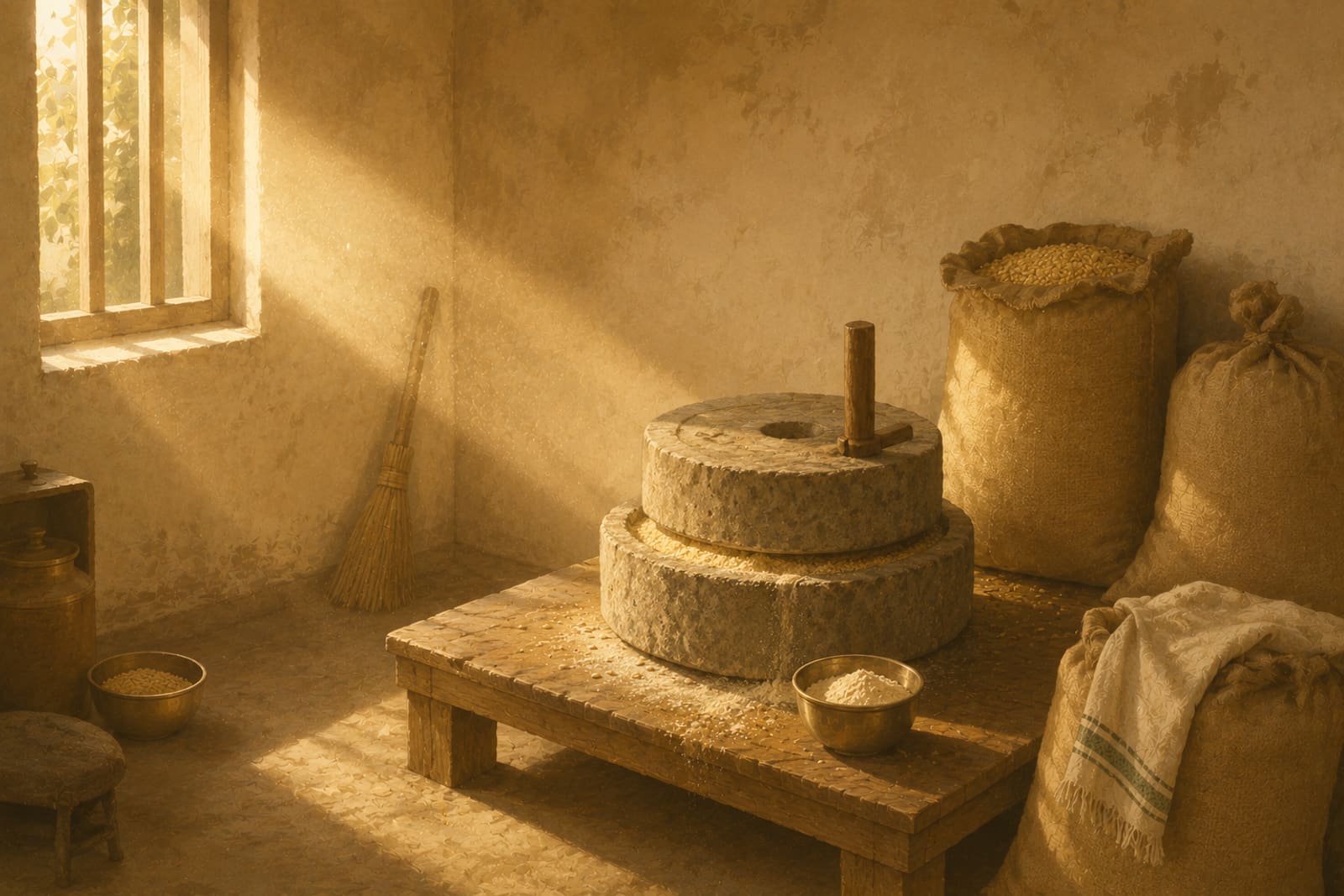
Granite, turning slowly. A stone mill runs at a low speed and stays comparatively cool; a steel roller mill runs fast and warmer. Both produce flour. They do not produce the same flour.
The whole grain goes through together — bran, germ and endosperm — and comes out together. Nothing is separated and recombined afterwards.
Where the grain comes from
Grown almost next door to the stones. Bought in season and stored as whole grain, which keeps for years — only the flour is perishable, so only the flour is made to order.
An older, unhybridised emmer wheat, grown in far smaller volumes than common wheat.
Jowar from the Deccan, bajra from the desert's edge, ragi from the southern hills — each from the country that eats it daily.
Real clock times. This is what happens to an order placed before 8 PM yesterday.
Grain cleaned and weighed
5:30 AM
Stones start
6:00 AM
Packed and date-printed
9:00 AM
Courier pickup
11:00 AM
In transit
Same evening
On tomorrow morning's stone, if you order by 8 PM tonight.
Choose your atta